
For this project, I initially intended to use ink, so it was the medium for my early sketchbook experiments.
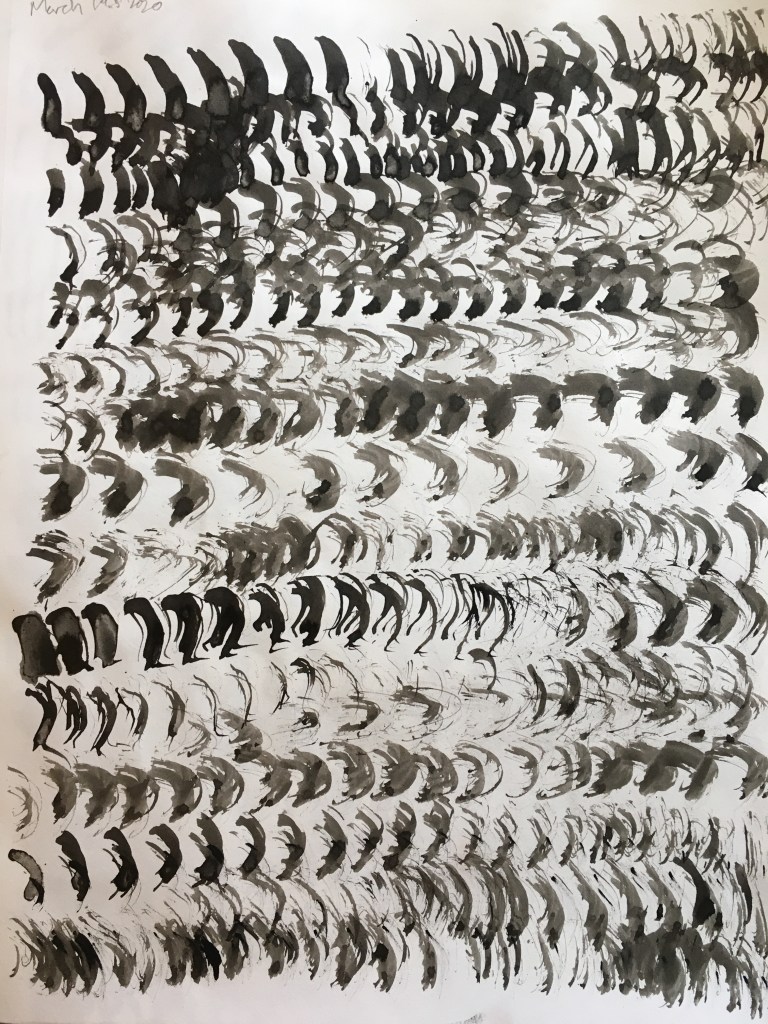
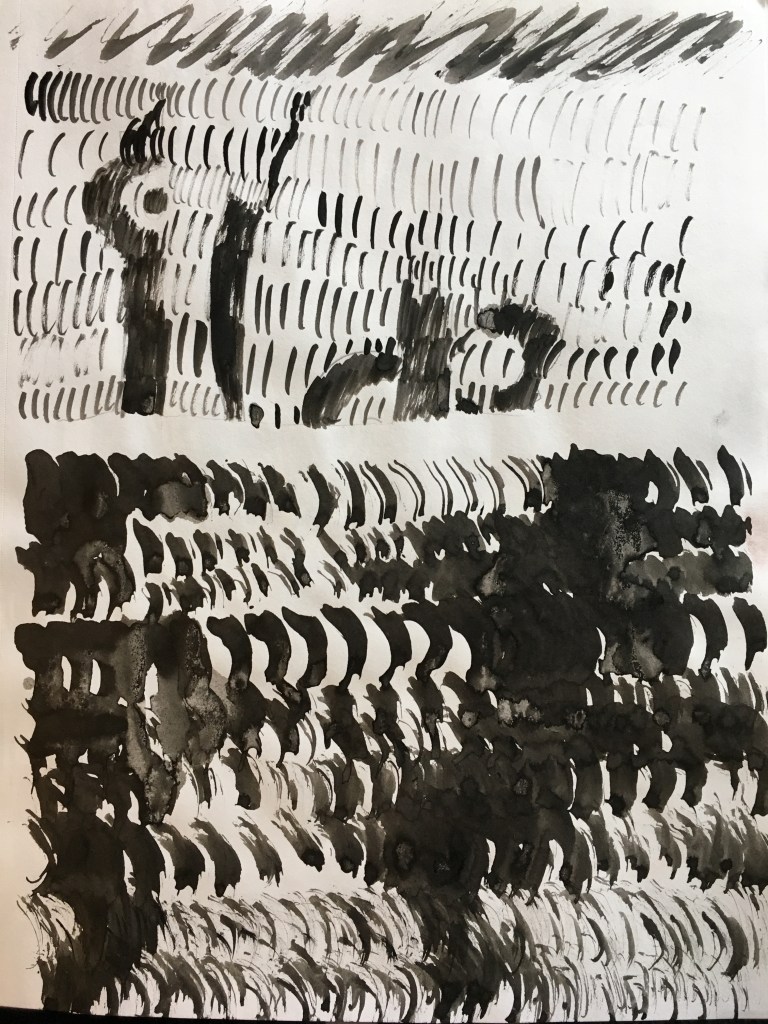
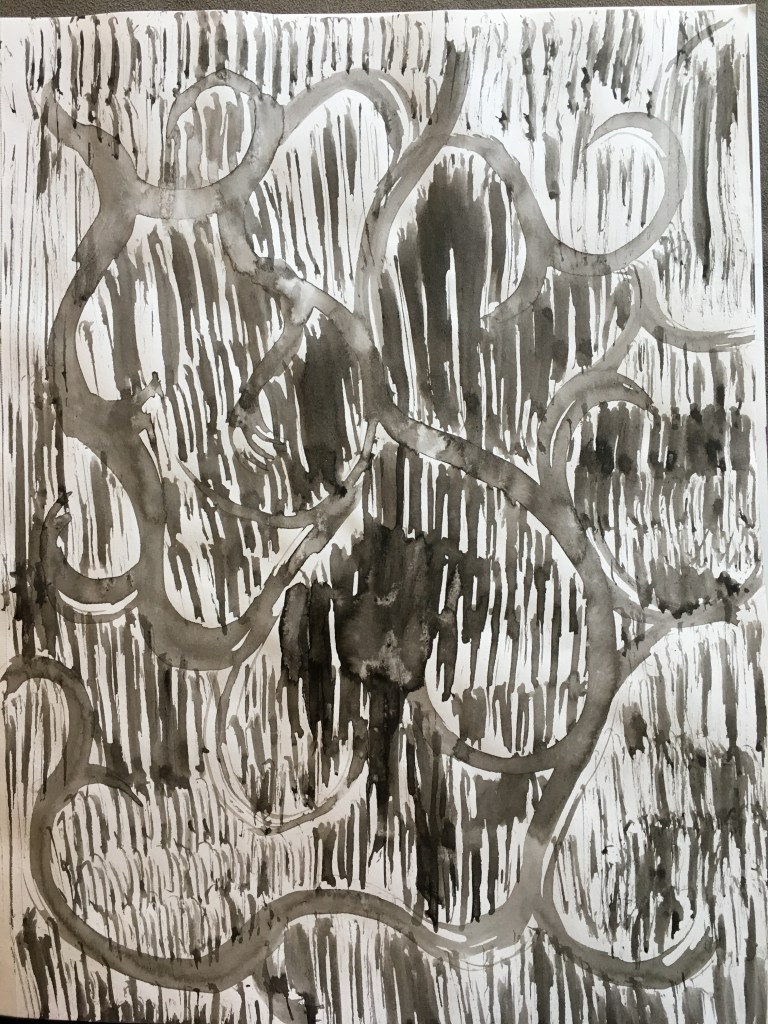
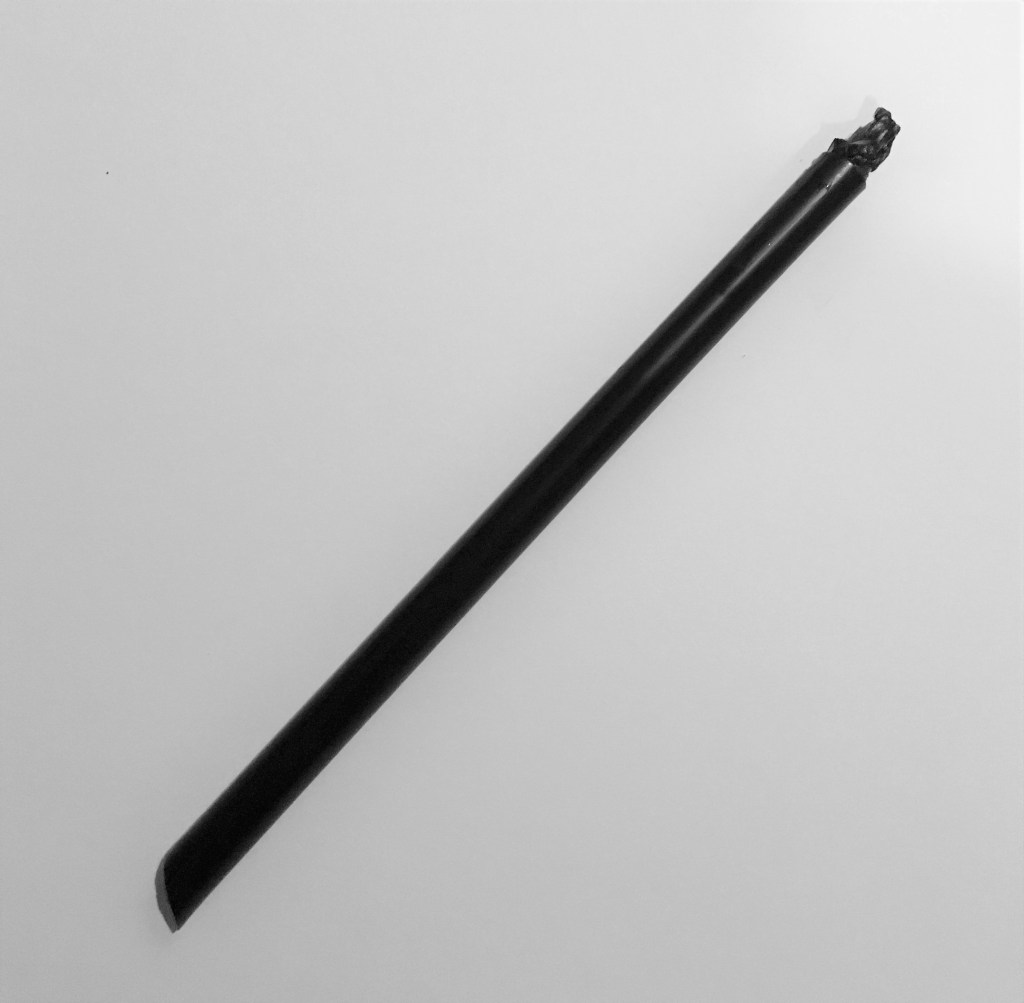
However, I found difficulty in controlling the ink flow and maintaining a consistent value between marks, even after trying several drawing implements, including both traditional brushes and homemade tools.
So next I did some experiments with dry media: graphite, conte, sanguine, and charcoal.
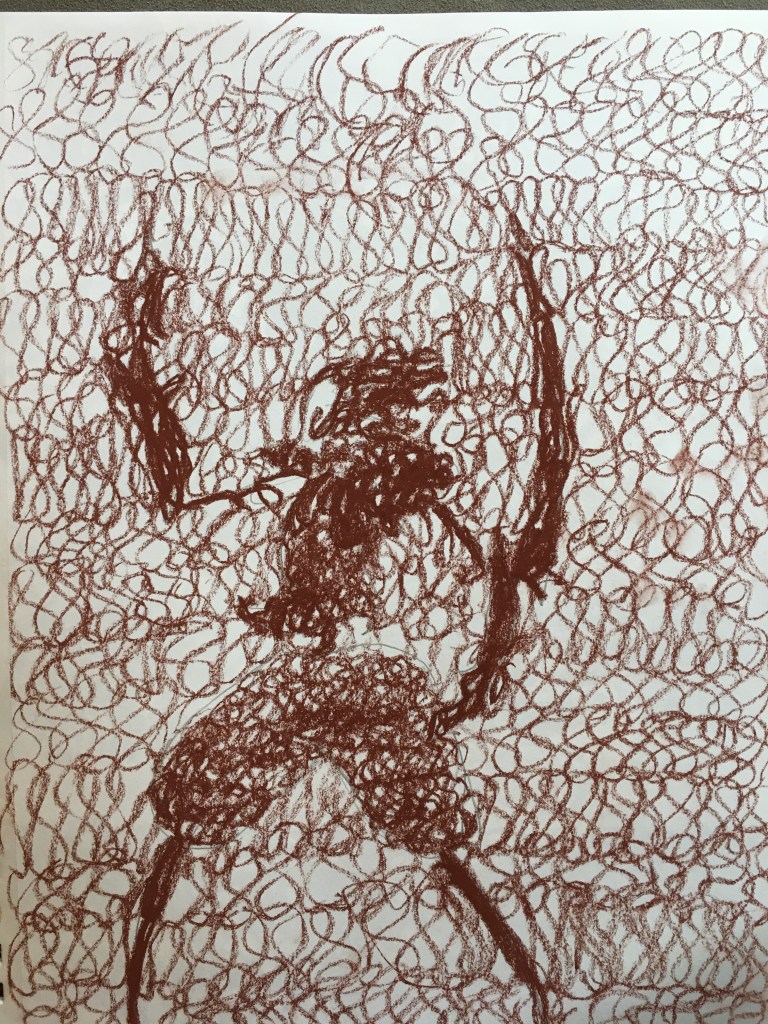
repeating conte figure-8s to create a character silhouette 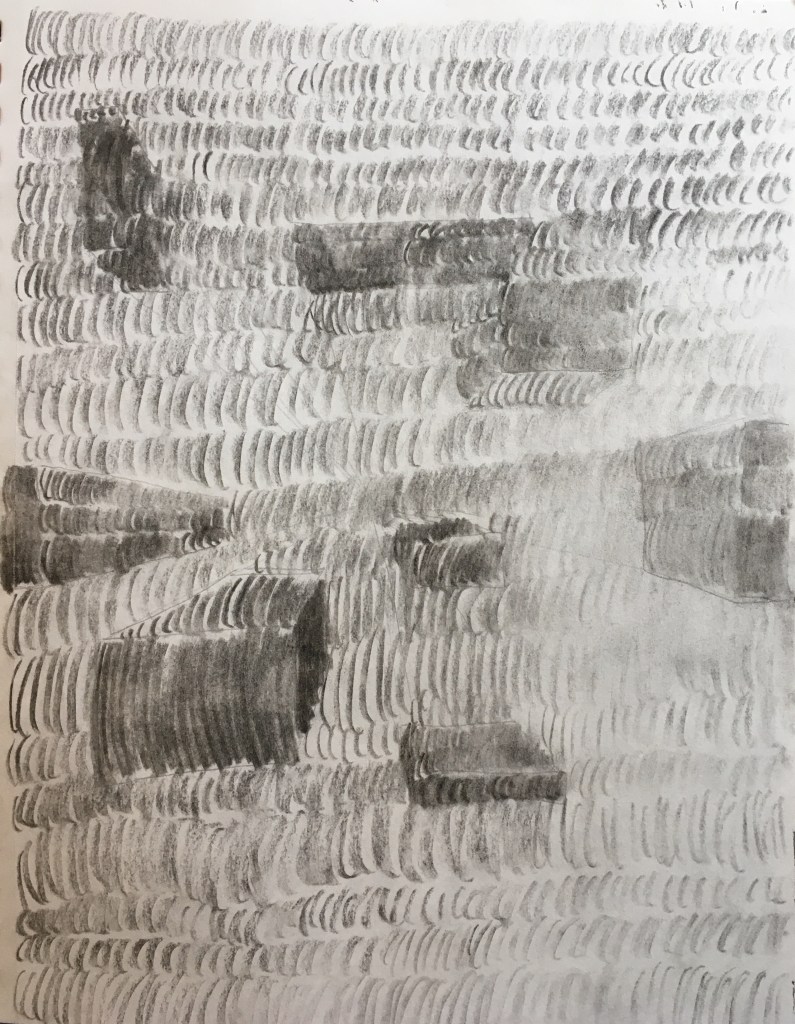
vine charcoal vertical strokes to create perspective boxes 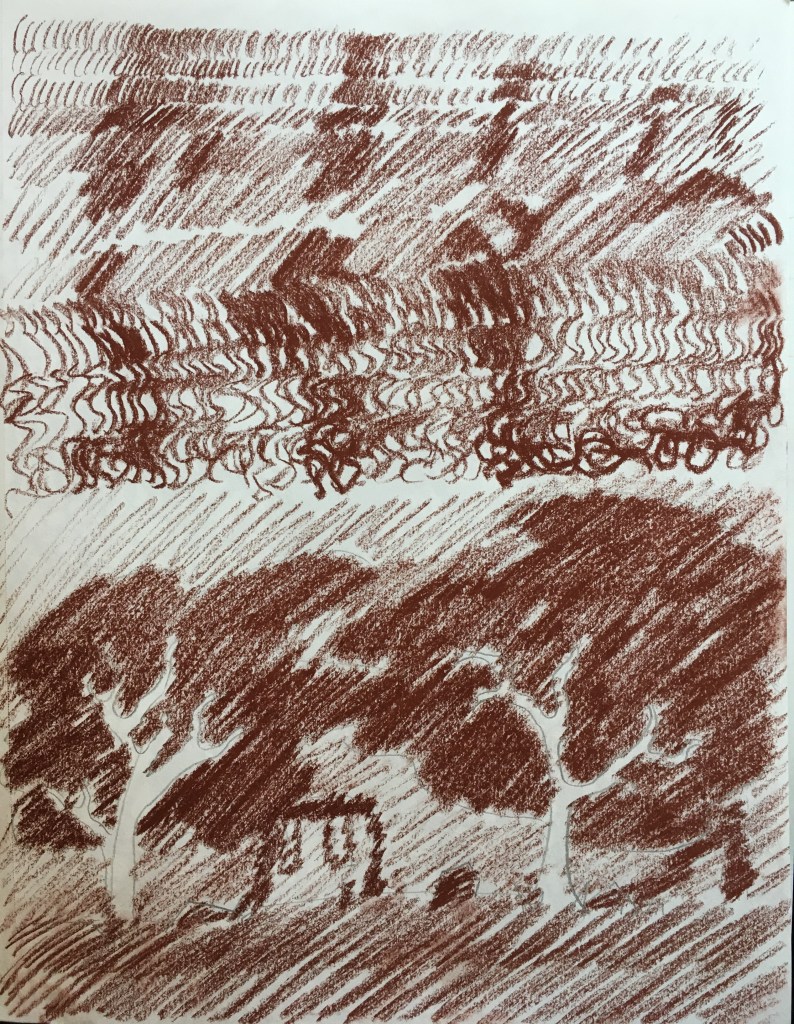
sanquine and conte marks + a park scene created with diagonal marks 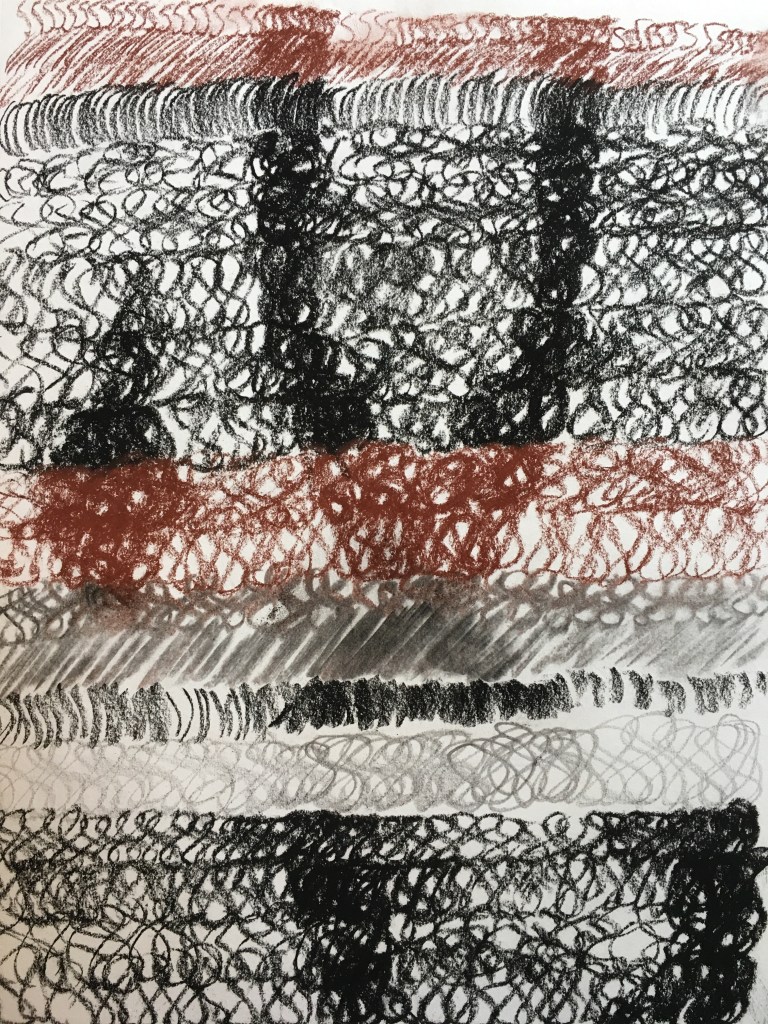
experimenting with a variety of materials & marks
I kept coming back to a repeating figure-eight pattern that was easy to use and produced an interesting “made-of-hair” look. I also chose compressed charcoal sticks for the clear values they produced and the smoothness of their strokes.
I used these charcoal figure-eights for my final drawing, a still life of Roman vases in a glass case from the Kent State art museum.

This drawing was created by laying out the composition with light gestural lines and then drawing each row of marks onto the page like a printer: top to bottom, left-to-right then right-to-left, varying the value and density of marks in specific areas to create the value changes in the finished piece.
Some other artists that use interesting mark-making techniques are Katy Ann Gilmore and Henry Moore. Henry Moore’s drawings are chaotic and full of energy, using scribble marks going in many different directions to create texture in his compositions. I find his depictions of hands very interesting because of the high level of realism they convey through such wild markings.
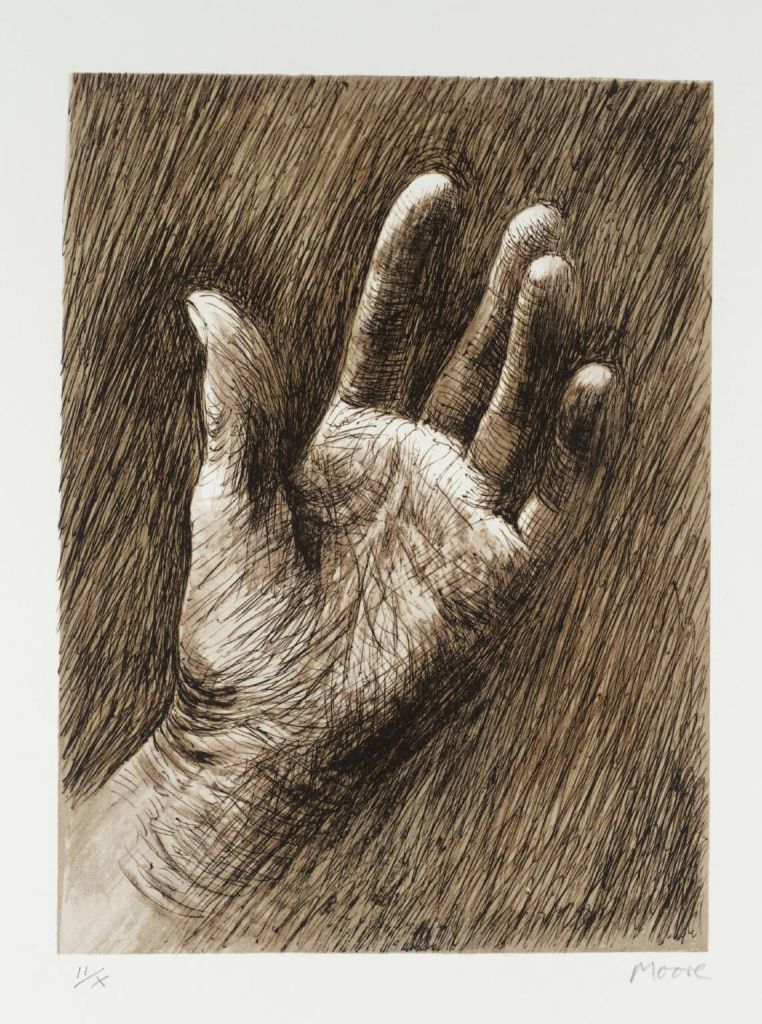
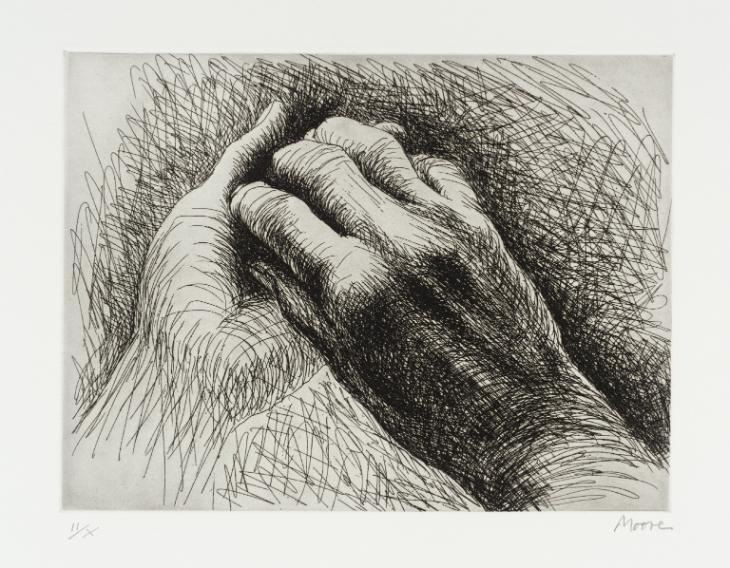
The Artist’s Hand II 1979 Henry Moore OM, CH 1898-1986 Presented by the Henry Moore Foundation 1986 http://www.tate.org.uk/art/work/P02908
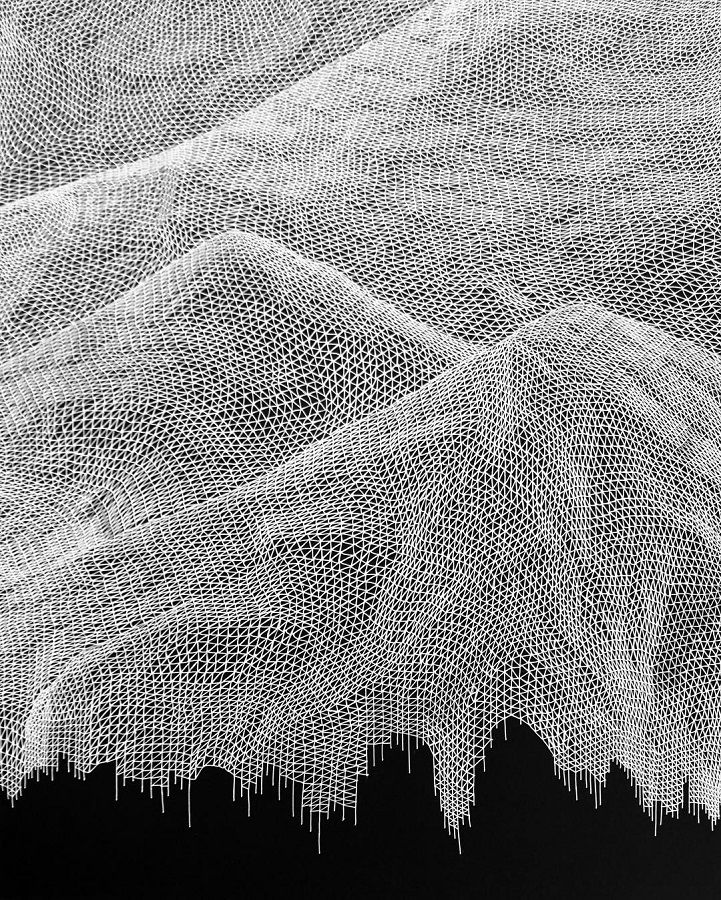
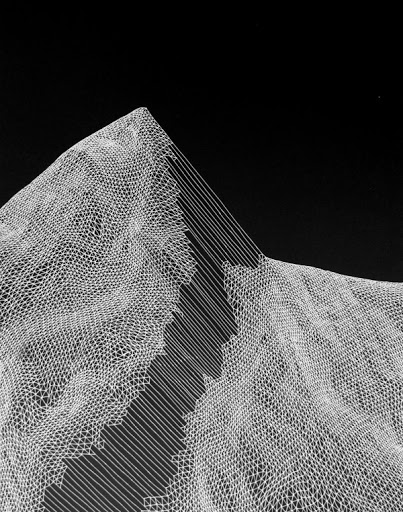
Katy Ann Gilmore has a completely different approach to mark making. Her compositions often resemble topological maps of mountains or other rough terrain. A triangular grid deformed in various ways (compressed, stretched, angled) communicates a sense of shifting mass that gives an illusion of huge, complex volumes. This is a much more precise type of mark making with a basis in mathematics. I always love to see art and math come together and these mountains are no exception.
What I’m Listening To:
What I’m Listening To is what music I listen to while making art.
 Artwork | Titus Morrison